
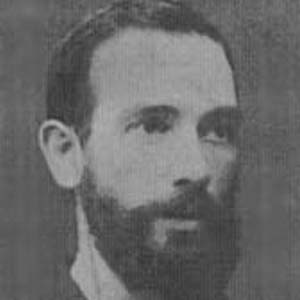
David Edelstadt (May 9, 1866, Kaluga, Russia – 17 October 1892, Denver, Colorado) was a Jewish-Russian-American anarchist poet in the Yiddish language.
Edelstadt was deeply affected by the life of his father, a cantonist who had been forcibly conscripted into the Tsar’s army for a term of 25 years – a type of conscription that was typical of the Imperial regime, and often used against Jews. David was educated in Russian language and literature; he published his first poem in Russian at the age of 12.
In 1882 at the age of 15, David emigrated to the United States after escaping the Kiev pogrom of May 8, 1881. He settled in New York City, where he became involved in the developing anarchist movement. He participated in the first Jewish anarchist group in New York, The Pioneers of Liberty (Pionire der Frayhayt). The group was created after the arrest of the (later to be) Chicago Haymarket martyrs, then a group of anarchist labor organizers working for the 8-hour day. The first dozen workers who initially set the group were later joined by Edelstadt and other gifted writers and speakers – Saul Yanovsky, Roman Lewis, Hillel Solotaroff, Moshe Katz, and JA Maryson.
Edelstadt and the others held meetings, sponsored rallies and raised funds to help the Chicago anarchists. The Pioneers organised a ball on the Lower East Side which raised $100, which was then sent to the families of the defendants. They began to spread anarchist propaganda among the Jewish immigrants, who were arriving in the States in increasing numbers. They set up a club and brought out literature in Yiddish, including a pamphlet on the Haymarket case.
The intense propaganda led to the establishment of anarchist circles in other towns – Baltimore, Boston, Philadelphia and Providence. Edelstadt and others travelled to Philadelphia to deliver talks. The group kept in touch with the Jewish anarchists in London, and Edelstadt contributed to the London Yiddish anarchist paper Arbeiter Fraynd (Workers’ Friend).
David was the third chief editor of the Freie Arbeiter Stimme (Free Voice of Labor). He set up various columns and features, which contributed to its popular success. He produced a series of tribute poems to the executed Chicago anarchists.
A buttonhole-maker by trade, the bad conditions in the sweatshops and the tenements led to his contracting tuberculosis and he was forced to quit his post in October 1891. He moved to Denver for a cure. Although he continued to send poems to the paper, the end was near. He died there on 17 October 1892 at the age of 26. David Edelstadt is buried in Golden Hill Cemetery near W. Colfax Avenue in Golden, Colorado.
In the next few years, Edelstadt cultural groups sprang up in Chicago, Boston and other cities. In Argentina many years later, Jewish anarchists named their cultural circle in Buenos Aires after him. The Freie Arbeiter Stimme said of him: “David Edelstadt, a fine idealistic nature, a spiritual petrel whose songs of revolt were beloved by every Yiddish-speaking radical.”
12 thoughts on “Kaminos”
Was Nicholas related to Alexander Saslavsky who married Celeste Izolee Todd?
Anyone have a contact email for Yair Klinger or link to score for Ha-Bayta?
wish to have homeland concert video played on the big screen throughout North America.
can organize here in Santa Barbara California.
contacts for this needed and any ideas or suggestions welcomed.
Nat farber is my great grandpa 😊
Are there any movies or photos of max kletter? His wife’s sister was my stepmother, so I’m interested in seeing them and sharing them with his wife’s daughter.
The article says Sheb recorded his last song just 4 days before he died, but does not tell us the name of it. I be curious what it was. I’d like to hear it.
Would anyone happen to know where I can find a copy of the sheet music for a Gil Aldema Choral (SATB) arrangement for Naomi Shemer’s “Sheleg Al Iri”. (Snow on my Village)?
Joseph Smith
Kol Ram Community Choir, NYC
Shalom Joseph. I just saw your 2024 post by chance… I’m a mostly-retired Israeli journalist and translator. In 2003 I translated into English the content (the objective was to remain true to the meaning, not to cadence or rhyme) of poems and lyrics of 48 of Israel’s most iconic songs arranged by Aldema for choirs abroad singing in Hebrew (the words in the scores are transliterated) but members of the choir lack mastery of Hebrew to ‘know’ exactly what they are saying/singing… The book was titled in English “A Merry Choir” – in Hebrew מקהלה עליזה . See if you can find a copy in a used book store, it is priceless and apparently out-of-print – well worth the search. If not, they may have a copy at Tel Aviv Amenu Museum’s music department – write them and see if they can send it to you. Or – if you will contact me via Whatsapp – (972) 546872768 or via my email – I will try and find the book (it is not where it ‘should be’ so I have to search) and I will photograph the score with my cell and send to you as an attachment. Best, Daniella Ashkenazy – Kfar Warburg.
שלום שמעון!
לא שכחתי אותך. עזבתי את ישראל בפברואר 1998 כדי להביא את בני האוטיסט לקבל את העזרה המקצועית שלא הייתה קיימת אז בישראל. זה סיפור מאוד עצוב וטרגי, אבל אני הייתי היחיד עם ביצים שהביא אותו והייתי הורה יחיד בשבילו במשך חמישה חודשים. הוא היה אז בן 9. כעת הוא בן 36 ומתפקד באופן עצמאי. נתתי לו הזדמנות לעתיד נורמלי. בטח, אבות כולם חרא, אומרים הפמינציות, אבל כולם צריכים לעבוד כמטרות במטווחי רובה!
משה קונג
(Maurice King)
Thank you for this wonderful remembrance of Herman Zalis. My late father, Henry Wahrman, was one of his students. Note the correct spelling of his name for future reference. Thank you again for sharing this.
Tirza Wahrman (Mitlak)
amazing zchuso yagein aleinu, he wrote the famous niggun Lefichuch that is sung in almost every Israeli Yeshiva
My grandmother, Rose Ziperson, wrote the words to his music for a song called Main Shtetele, which he produced. I have the sheet music!