
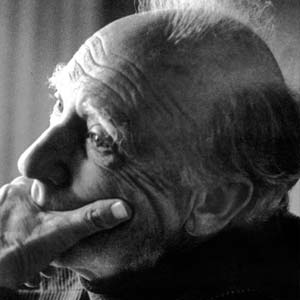
Julius Chajes was a highly accomplished virtuoso concert pianist as well as conductor who settled in America as a refugee from the Third Reich in the wake of the Austrian electorate’s vote for annexation to Germany in the infamous plebiscite of 1938.
But it was as a composer that he made his most enduring contribution to the music of American Jewry—to the American Synagogue, largely in the Reform milieu but also in many Conservative synagogues, as well as to the secular Jewish concert repertoire of his adopted country.
Chajes was born in Lemberg [L’vov], Galicia (then part of the Austro-Hungarian Hapsburg Empire, but now Poland), to a cultured upper-middle-class family. He began piano lessons at the age of seven with his mother, Velerja Chajes, a well-recognized concert pianist. His succeeding teachers included Julius Isserlies, Hedwig Kanner-Rosenthal, and one of the legendary pianistic giants, Moritz Rosenthal, in Vienna—where a distant relative, Hirsch (Tzvi) Peretz Chajes, was the chief rabbi from about 1918 until his death, in 1927. At the age of nine, Chajes gave his first piano recital and wrote his first piano piece, followed by a string quartet when he was thirteen; and at fifteen he performed his own piano concerto (Romantic Fantasy) in Vienna. His second string quartet was performed by the famous Rose Quartet, and later he was awarded an important prize at the First International Piano Competition there in 1938.
Beginning in 1934, Chajes lived for about two years in Palestine, where he chaired the piano department of the Beit L’viyim music academy in Tel Aviv and also became interested in studying Jewish musical sources in antiquity and some of the accumulated folk music of the region. During his stay in Palestine he was influenced by the emerging melos—especially the so-called Mediterranean style—being developed by other Jewish composers who had also come from Europe. This, together with his exposure to Arabic and Hebrew Palestinian folk and folk-type tunes and to the song repertoire of the settlers, made an indelible imprint on many of his future compositions.
Chajes came to America in 1938, following his receipt of two prizes from the Jüdische Kulturbund in Berlin for choral works the previous year. His American reputation quickly took root, and his Psalm 142 for mixed chorus and organ was performed at the 1939 New York World’s Fair; at the Reform movement’s Union of American Hebrew Congregations 1942 convention; and at the annual meeting and concert of the American Guild of Organists in 1944. In 1940 he settled in Detroit, where he became an important figure in the musical life of the Jewish community and the city in general. He founded a symphony orchestra of the Jewish Community Center there, which gave sophisticated programs on a regular basis for many years. He was the music director at Temple Beth El, and beginning in 1950, he served on the faculty of Wayne State University. Meanwhile, he maintained his pianistic concert career, with performances that included playing his own piano concerto with the Detroit Symphony conducted by Paul Paray. He was also chairman and cofounder of the local organization HASHOFAR—Society for Advancement of Jewish Music—and he cochaired the Detroit Round Table for Catholics, Jews, and Protestants.
Chajes’s catalogue ranges from works for full symphony orchestra to concert choral settings—a number of which were widely performed throughout the United States during the 1940s and 1950s by Jewish choral ensembles—to chamber pieces and numerous songs; and some of his prayer settings became standard fare in synagogue services. His operatic cantata The Promised Landwas written to commemorate Israel’s tenth anniversary, and his three-act opera, Out of the Desert, spanning Jewish history in the Near East from the biblical account of the exodus from Egypt to the modern State of Israel, received its world premiere in 1966.
12 thoughts on “Kaminos”
Was Nicholas related to Alexander Saslavsky who married Celeste Izolee Todd?
Anyone have a contact email for Yair Klinger or link to score for Ha-Bayta?
wish to have homeland concert video played on the big screen throughout North America.
can organize here in Santa Barbara California.
contacts for this needed and any ideas or suggestions welcomed.
Nat farber is my great grandpa 😊
Are there any movies or photos of max kletter? His wife’s sister was my stepmother, so I’m interested in seeing them and sharing them with his wife’s daughter.
The article says Sheb recorded his last song just 4 days before he died, but does not tell us the name of it. I be curious what it was. I’d like to hear it.
Would anyone happen to know where I can find a copy of the sheet music for a Gil Aldema Choral (SATB) arrangement for Naomi Shemer’s “Sheleg Al Iri”. (Snow on my Village)?
Joseph Smith
Kol Ram Community Choir, NYC
Shalom Joseph. I just saw your 2024 post by chance… I’m a mostly-retired Israeli journalist and translator. In 2003 I translated into English the content (the objective was to remain true to the meaning, not to cadence or rhyme) of poems and lyrics of 48 of Israel’s most iconic songs arranged by Aldema for choirs abroad singing in Hebrew (the words in the scores are transliterated) but members of the choir lack mastery of Hebrew to ‘know’ exactly what they are saying/singing… The book was titled in English “A Merry Choir” – in Hebrew מקהלה עליזה . See if you can find a copy in a used book store, it is priceless and apparently out-of-print – well worth the search. If not, they may have a copy at Tel Aviv Amenu Museum’s music department – write them and see if they can send it to you. Or – if you will contact me via Whatsapp – (972) 546872768 or via my email – I will try and find the book (it is not where it ‘should be’ so I have to search) and I will photograph the score with my cell and send to you as an attachment. Best, Daniella Ashkenazy – Kfar Warburg.
שלום שמעון!
לא שכחתי אותך. עזבתי את ישראל בפברואר 1998 כדי להביא את בני האוטיסט לקבל את העזרה המקצועית שלא הייתה קיימת אז בישראל. זה סיפור מאוד עצוב וטרגי, אבל אני הייתי היחיד עם ביצים שהביא אותו והייתי הורה יחיד בשבילו במשך חמישה חודשים. הוא היה אז בן 9. כעת הוא בן 36 ומתפקד באופן עצמאי. נתתי לו הזדמנות לעתיד נורמלי. בטח, אבות כולם חרא, אומרים הפמינציות, אבל כולם צריכים לעבוד כמטרות במטווחי רובה!
משה קונג
(Maurice King)
Thank you for this wonderful remembrance of Herman Zalis. My late father, Henry Wahrman, was one of his students. Note the correct spelling of his name for future reference. Thank you again for sharing this.
Tirza Wahrman (Mitlak)
amazing zchuso yagein aleinu, he wrote the famous niggun Lefichuch that is sung in almost every Israeli Yeshiva
My grandmother, Rose Ziperson, wrote the words to his music for a song called Main Shtetele, which he produced. I have the sheet music!